
Perhaps We Have Been Thinking Too Small
By Victor Gurung
Press Attaché | Team Bhutan
20th Asian Games Aichi-Nagoya 2026
OKAZAKI, Japan | 29 SEPTEMBER 2026
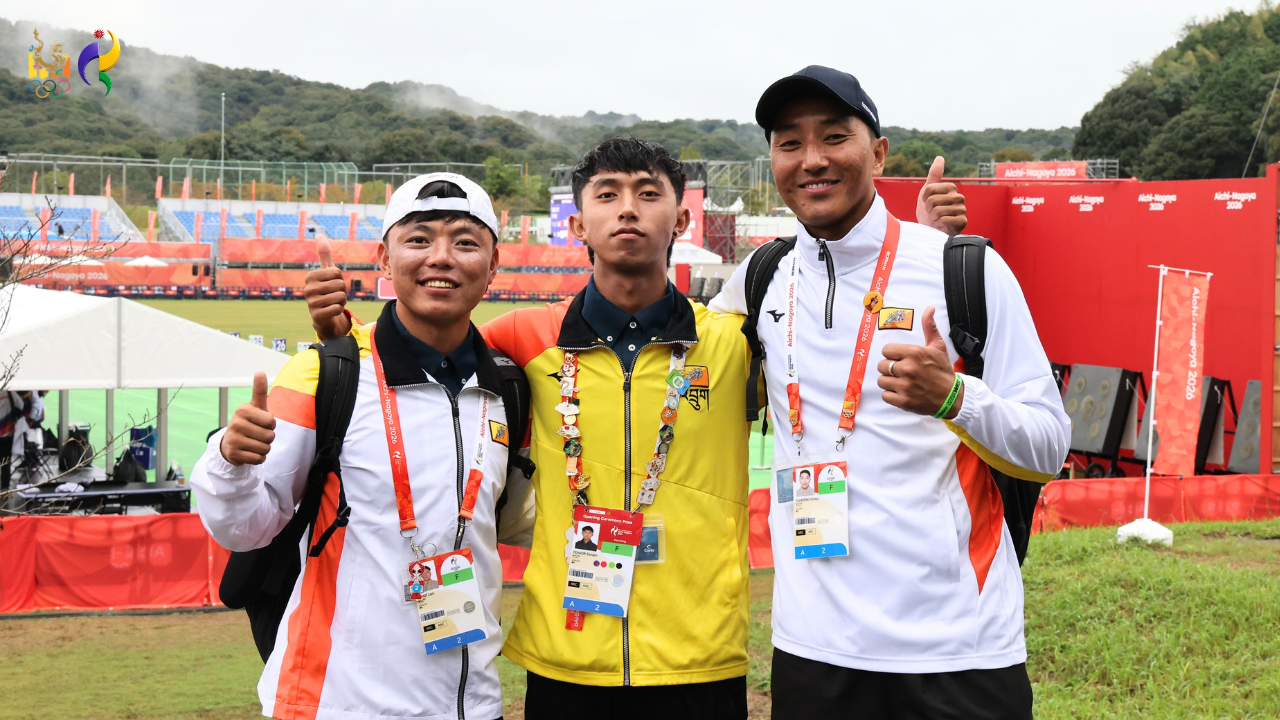
There is something about watching our athletes compete against opponents who are already established at the highest level of their sport that makes us look beyond the result itself. These are not athletes who are strong simply because of a ranking on a qualification sheet; many have years of international competition behind them, experience at major Games and championships, sophisticated training systems and the benefit of competing regularly against the best in the world. They are elite athletes, and there is every reason to respect the level they have reached.
But respect for an opponent should never become fear of the opponent.
That is perhaps one of the most important lessons we can take from what we have witnessed at the 20th Asian Games Aichi-Nagoya 2026, particularly from the performances of Kinley Tshering and Lam Dorji in the Recurve Men’s Individual competition in Okazaki. Their victories were not simply wins against names on a draw sheet; they came against athletes from strong sporting nations who had entered the competition with higher qualification rankings and considerable international experience. What Kinley and Lam demonstrated was not that the gap between us and these established sporting nations has disappeared, but that when our athletes are properly prepared and mentally ready, they can step onto the same field, respect the level of the opposition and still believe that they belong in the contest.
Both archers entered the elimination rounds outside the top 30 in qualification. Lam finished 31st with 659 points, while Kinley finished 37th with 655. On paper, those numbers placed them behind many of the leading archers in the field, but once the elimination rounds began, what mattered was no longer where they had started in the qualification table, but how they handled each match in front of them.
Kinley defeated Tajikistan’s Dilshodi Bakhtiyor 7–1 before facing Indonesia’s Ahmad Khoirul Baasith, who had qualified fifth with 686 points. Kinley won that contest 6–4 and then faced China’s Li Mengqi, the 13th-ranked qualifier with 678 points, in a match that went all the way to 6–5. Lam began his campaign with a 6–0 victory over Kyrgyzstan’s Ulukbek Kursanaliev before producing a 6–4 win against Iran’s Mohammadhossein Golshani Asl, who had qualified eighth with 682 points. He then defeated Hong Kong, China’s Kwok Yin Chai, the 11th-ranked qualifier, 6–4. Both men won three matches and moved into the quarterfinals.
These results deserve to be appreciated for what they actually represent. They do not mean that rankings no longer matter, nor do they erase the considerable gap that still exists between Bhutan and the established sporting powers of Asia. They do, however, remind us that a ranking tells us where an athlete stands at a particular point in time; it does not determine what happens when the athlete steps onto the shooting line.
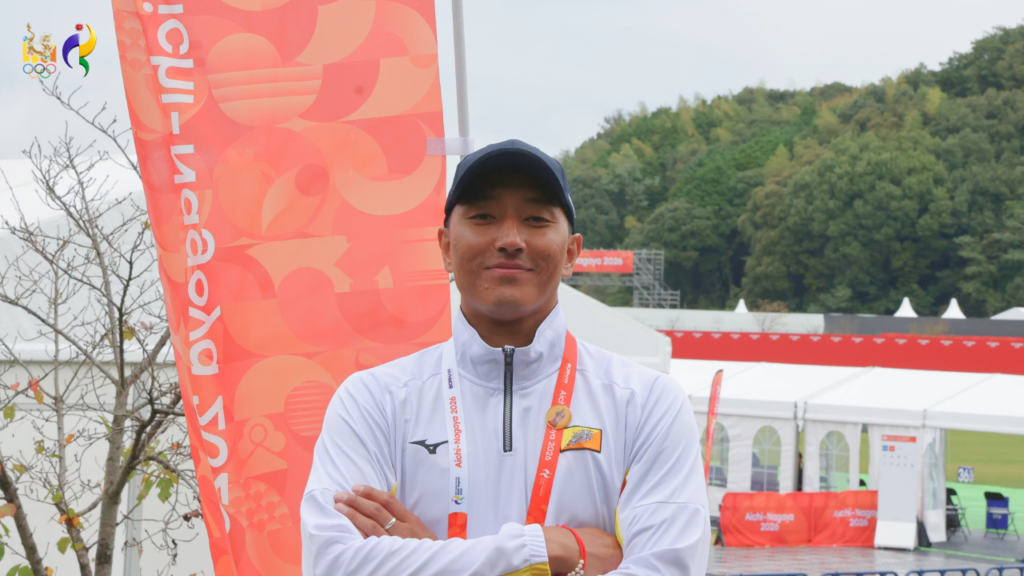
That distinction matters because we sometimes speak about our athletes with a certain caution. We know the reality of our circumstances, and there is nothing wrong with acknowledging it. Bhutan has a small population, a limited athlete base and fewer sporting resources than many of the countries we compete against, while our athletes do not always have the same depth of competition or access to specialised support that athletes from larger sporting nations enjoy. Understanding those realities is necessary, but there is a difference between understanding our limitations and allowing those limitations to define the boundaries of our ambition.
Perhaps this is where we need to change the conversation around Bhutanese sport. We should know the strengths of our opponents, study their systems and understand what separates them from us, just as we should be honest about where we are behind and why we are behind. But that information should become part of preparation rather than a reason to decide the outcome before competition begins. When our athlete sees a highly ranked opponent on the other side of the range, the first thought should not be that the opponent is too strong; it should be to understand what needs to be done to compete with that athlete and give ourselves the best possible chance of winning.
That is a different mindset, and it is one that has to be developed over time.
It is also important to recognise that the performances we are witnessing at these Asian Games did not begin in Okazaki. They are not the product of a few weeks of preparation or something that appeared suddenly because the Asian Games arrived. At the Bhutan Olympic Committee, work towards developing athletes through a broader high-performance approach has been taking place over the past four years, with the aim of building more than individual athletes and creating a pathway in which training, coaching, competition exposure, physical preparation, mental preparation and other forms of support can gradually come together.
This Asian Games has given us an opportunity to see some of those elements working together, and that is perhaps one of the most encouraging aspects of the Games for Bhutan. It is important, however, to recognise that no sporting system becomes complete in four years, and there will always be areas that need more attention, more resources, more expertise and more time. What matters is that we can begin to see evidence that the work already undertaken is helping our athletes become more competitive and increasingly comfortable competing against stronger and more experienced opposition.
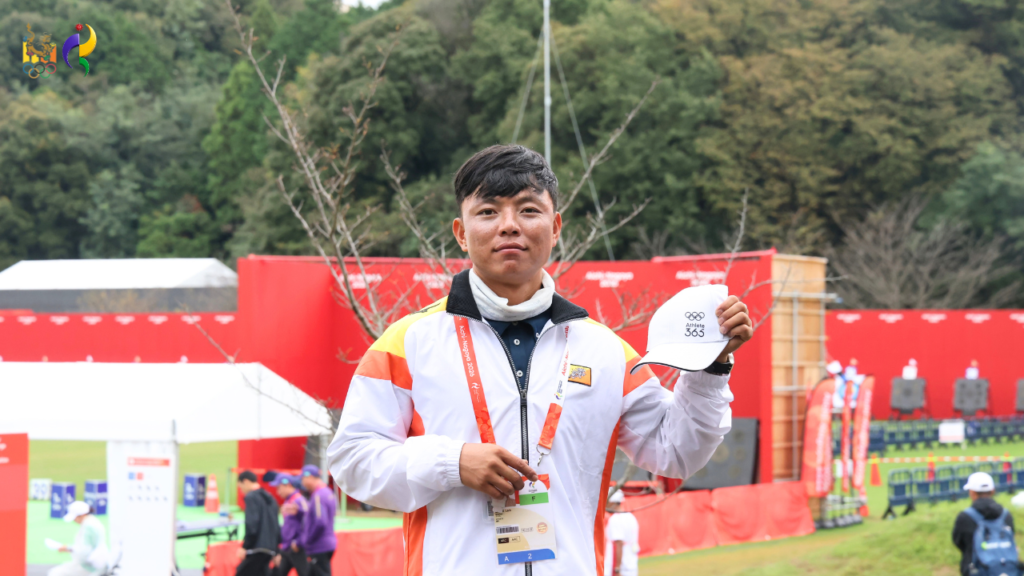
That is what makes the current performances worth looking at beyond the individual results.
The progress of our athletes should not be measured only by medals, even though medals will always remain an important goal for anyone representing the country. High performance is also about narrowing gaps, increasing competitiveness, developing confidence, learning how to manage pressure and creating athletes who believe they belong in the same competition as the best in Asia. Kinley and Lam have given us a glimpse of that because they have not simply won matches; they have competed against opponents who entered the elimination rounds with higher qualification rankings and greater international experience, and they have shown that our athletes can stay in those contests, manage the pressure and execute when it matters.
Their performances are part of a wider development journey, and the BOC’s BEAST program is one of the platforms through which Bhutan has been working to strengthen that high-performance pathway. The important thing now is not to treat these results as the end of something, but as encouragement to continue building on what has already been started.
We need to give our young athletes something better than false confidence, because telling an athlete that they will win every time is neither realistic nor useful. What we can give them is the confidence to prepare properly, to respect the opponent without being intimidated by the opponent, to understand that losing is part of sport and, most importantly, to believe that they have earned the right to compete at that level. That belief cannot come from words alone; it has to be built through preparation, experience and the support that surrounds the athlete.
This is where the responsibility of the wider sporting system becomes important. An athlete cannot be expected to carry the ambitions of a sporting nation alone. The athlete has to do the work, certainly, but around that athlete there needs to be a functioning environment of coaching, technical support, physical preparation, recovery, nutrition, sports medicine, psychology, competition exposure and performance analysis.
This is also an area where we should acknowledge the progress made within the BOC over recent years. For the 2026 Asian Games, greater attention has been given to several of these elements as part of the preparation of Team Bhutan, with athlete development increasingly being looked at as something broader than simply sending athletes to competitions. The preparation around the athlete matters, and bringing different forms of support into that process can make a meaningful difference.
The important point is that this did not start this year.
The work has been running for around four years, with the understanding that meaningful sporting development takes time. An athlete does not become high-performance ready because of one training camp, one competition or one major Games; it takes years of preparation, repeated exposure, setbacks, adjustment and learning. The results we see in front of us today are therefore connected to work that began much earlier, and that should give us both confidence in what is being built and patience with the time required to build it properly.
At the same time, trusting a process does not mean assuming that the process itself cannot improve.
Sport is changing quickly. The techniques used by elite athletes are evolving, equipment is becoming more sophisticated, performance analysis is increasingly data-driven and sports science is playing a much larger role in preparation and recovery. Sports psychology has also become an important part of high-performance preparation, and World Archery’s coaching and education framework reflects the wider role of technical, physical and mental preparation in developing athletes.
Our coaching and technical teams therefore have a responsibility to keep learning, just as our athletes do. They need to study what is happening internationally, attend courses, exchange knowledge, analyse performance and bring new ideas into our own system. This is not criticism of what has been done before; it is simply the nature of sport, where methods continue to evolve and where even successful systems have to keep learning if they want to remain competitive.
The best sporting systems in the world do exactly that, and Bhutan should be willing to do the same while respecting the experience and knowledge that have brought us to where we are today.
Respect for coaches is essential because an athlete needs to trust the people who have been with them through training, setbacks and competition. A sporting system cannot keep changing direction every time an athlete has a difficult result, but trust and learning can exist together. We can respect experience while continuing to seek knowledge, value what has brought us this far while remaining open to what can take us further, and recognise the work already done while continuing to improve the way we prepare our athletes.
The same applies to sports psychology, because we spend enormous amounts of time preparing the body while sometimes underestimating how much competition is experienced by the mind. An athlete needs to know how to deal with nerves, recover after a poor start, stay focused when an opponent is performing well and maintain confidence when a contest becomes close. In a sport such as archery, where the execution of every shot depends heavily on concentration and control, the mental side of performance cannot simply be left to chance, and these qualities cannot suddenly be developed when an athlete arrives at an Asian Games; they have to be trained, discussed and practised long before the major competition.
There is another part of this conversation that deserves equal attention: talent.
If we want Bhutan to become more competitive in sport, we cannot depend only on the athletes we already have. We have to keep looking for the next generation, which means stronger pathways from schools and communities into organised sport, better opportunities for young people to try different disciplines and systems that allow coaches to identify potential before it is too late.
The next Kinley Tshering or Lam Dorji may not know yet that they have talent. They may be sitting in a classroom somewhere in Bhutan, playing sport simply because they enjoy it, without ever imagining that one day they could represent Bhutan at an Asian Games. That is why the responsibility goes beyond producing elite athletes; we have to create a sporting culture in which young people see representing Bhutan as something within the realm of possibility.
A child should be able to watch Kinley and Lam compete in Okazaki and not simply admire them as athletes from a distance, but imagine themselves standing there one day. That imagination matters because participation often begins long before talent is identified; it begins when a young person believes there is a place for them in sport.
Perhaps this is also where we need to change the way we talk about our sporting ambitions. We should certainly want medals, set ambitious targets and want our athletes to compete at the highest level, but before we ask where the medals are, perhaps we should also ask how many children are playing, how many young athletes are being identified, how many coaches are being developed, how much competition our athletes are getting, how much scientific support they receive and how effectively all these pieces are working together.
Medals are usually the final visible product of a much longer process.
What we have seen at these Asian Games does not mean Bhutan has suddenly solved all its sporting challenges, and it would be unrealistic to suggest that. We still have much to build, and the gap between Bhutan and the strongest sporting systems in Asia remains real. But there is something equally important that we should not overlook: we now have more evidence that progress is possible.
The results in Okazaki are one example, while the performances of our athletes across different disciplines at these Games provide other pieces of the same picture. Some results may not appear on a medal table, but they can still tell us something about preparation, competitiveness and the direction in which an athlete is moving. That is why we should not look at this Asian Games only through the question of how many medals Bhutan wins; we should also ask what we have learned, what worked, what did not, where our athletes performed better than expected, where they struggled, what support made a difference and what gaps became visible.
That is how a sporting system grows.
There is also a danger in comparing ourselves constantly with other countries without first understanding our own journey. We should learn from Korea, India, China, Japan and every other country that has built successful sporting systems, study what they do well and understand how their athletes are developed, but our ultimate task is not to become a smaller version of another country. It is to build the best sporting system that Bhutan can realistically create, one that understands our own population, resources, geography, culture and the sports in which we have the potential to develop.
That requires patience, but it also requires ambition, and most importantly, it requires people to believe that development is possible while remaining honest about the amount of work still ahead.
Perhaps that is the balance we need.
We should not tell our athletes that everything is possible without hard work, because it is not. We should not tell them that rankings do not matter, because they do, and we should not pretend that Bhutan has no disadvantages, because it clearly does. But neither should we allow those realities to become reasons for lowering our expectations before the competition begins.
A fifth-ranked opponent can be beaten, an eighth-ranked opponent can be beaten, an 11th-ranked opponent can be beaten and a 13th-ranked opponent can be beaten, as Kinley and Lam have demonstrated at these Games. Two of our archers who began the elimination rounds outside the top 30 can find themselves among the final eight at an Asian Games, and that should not make us arrogant; it should make us more determined to learn, improve and continue.
Confidence is not the same as overconfidence. Confidence comes from preparation, from knowing your work, trusting your team and understanding that you have earned the right to stand on that line and compete.
This is perhaps the greatest opportunity in front of Bhutanese sport now. We have athletes who are showing greater competitiveness, coaches and technical people who have built valuable experience, development programs that have been running for years, more elements of high-performance preparation being brought into the athlete’s journey and young people who are watching all of this unfold. The task now is to connect these things with greater purpose.
An individual can dream about representing Bhutan, train for years and stand on the shooting line to produce something extraordinary, but no individual can build a sporting nation alone. A coach cannot do it alone, a federation cannot do it alone, the Bhutan Olympic Committee cannot do it alone, and neither can parents, schools, clubs, administrators, technical teams, sponsors or communities. Each has a role, and the strength of the sporting system ultimately depends on how well those roles come together around the athlete.
The work of the last four years should therefore not be seen simply as something that produced a result at Aichi-Nagoya. It should be seen as part of a longer journey, and if the foundation is becoming stronger, then the next responsibility is to build on it.
Perhaps this is the most encouraging thing about what we are witnessing. We are not starting from zero. There is work already underway, there are athletes already pushing boundaries, there are coaches gaining experience, there are young people becoming interested in sport and there are development programs designed to identify and strengthen talent. There are also lessons being learned at competitions such as the Asian Games, and those lessons are valuable if we have the discipline to take them home and turn them into better preparation for the next generation.
It is time to stop asking only whether Bhutan can compete and start asking what we need to do to compete better. It is time to stop looking at a ranking and seeing only a barrier, and instead use it as information that helps us understand the level we need to reach. It is time to stop believing that our small size automatically defines the size of our sporting ambitions, while remaining realistic about the work and investment required to turn those ambitions into results.
Most importantly, it is time to give our athletes the space to believe that they belong.
The responsibility that comes with that belief is considerable. It means working harder, learning more, preparing better and accepting that progress will not always be immediate. There will still be defeats, difficult competitions and moments when the gap looks large again, because that is part of sport. What matters is whether we learn from those moments and keep moving forward.
The performances in Okazaki have not given us permission to declare that Bhutan has arrived. They have given us something more useful: a reason to believe that the work is worth continuing and that the direction we have been taking can produce results when the right preparation, opportunity and belief come together.
Perhaps we have been thinking too small about where Bhutan can go, not because we should dream without limits, but because we should be willing to build what those dreams require.
We can put our ambitions on paper, write our targets and speak about our dreams, but a dream remains only a dream unless people come together to give it structure, discipline, resources, knowledge, opportunity and time. That is the opportunity in front of us now, and the responsibility is shared by all of us who have a role in Bhutanese sport.
The athletes have shown us what can happen when preparation meets belief and opportunity. Our responsibility now is to make sure more Bhutanese athletes get that opportunity, and to create a sporting environment where the young person watching today can believe that representing Bhutan tomorrow is not an impossible dream, but a possibility worth working for.
Perhaps the question we should carry forward from Aichi-Nagoya is therefore not simply how strong our next opponent will be, or where they stand in the rankings, but something much more useful and much more within our control: How good can we become?
Meet Team Bhutan
Everything you need to know about Team Bhutan at the Asian Games 2026.