
From 58 to Eight, Bhutan Stands Among Them
By Victor Gurung
Press Attaché | Team Bhutan
20th Asian Games Aichi-Nagoya 2026
OKAZAKI, Japan | 30 SEPTEMBER 2026
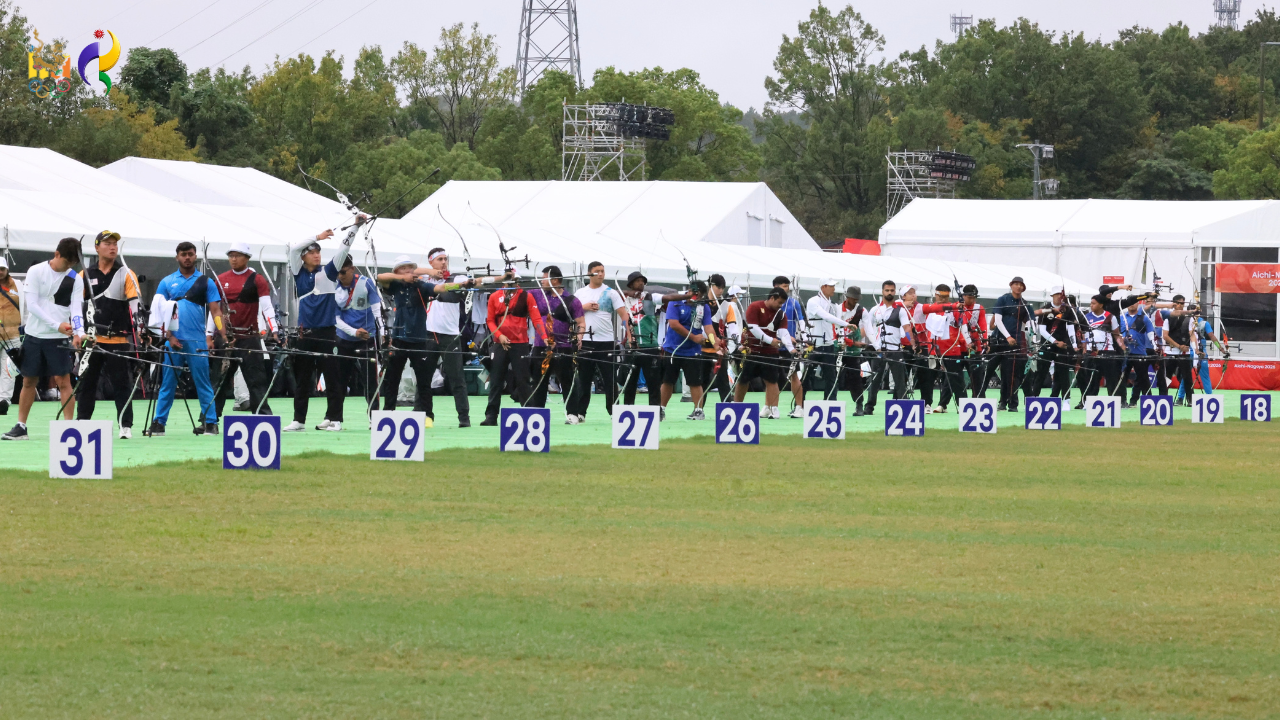
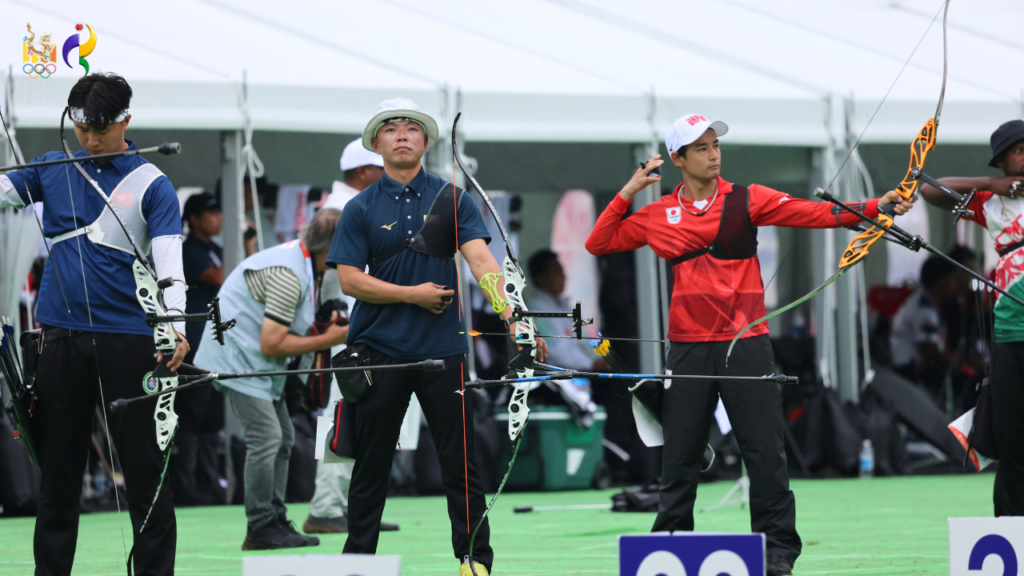
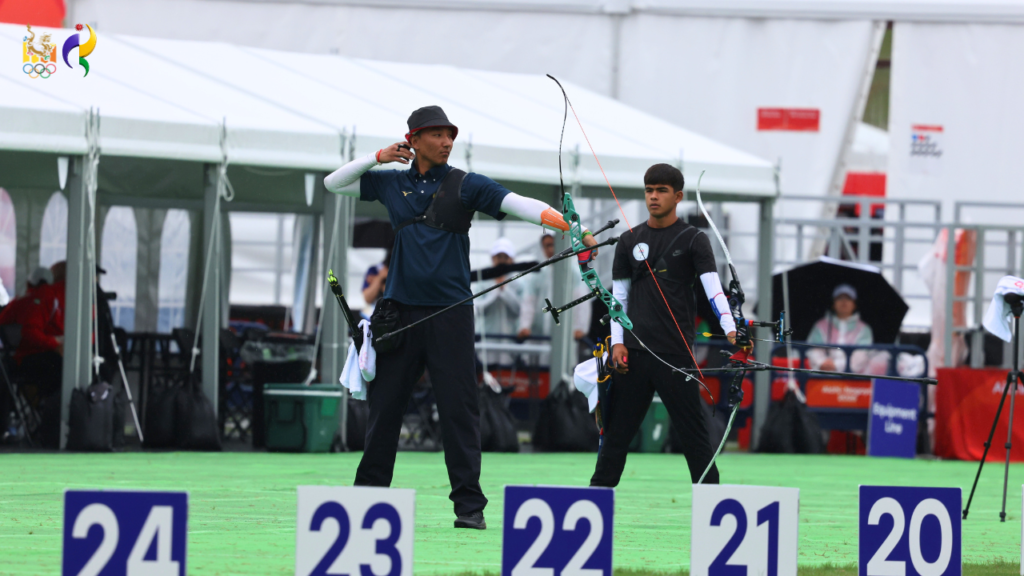
When the quarterfinal draw appeared at the archery venue in Okazaki, I found myself looking at it for a little longer than usual. Eight names were left from a field of 58, and among them were two names I had been following throughout the day: Lam Dorji and Kinley Tshering. For Bhutan, this was not simply another entry on an Asian Games results sheet. Our two archers had worked their way through the Recurve Men’s Individual elimination rounds and earned their place among the final eight, alongside athletes from some of the strongest archery nations in Asia.
The significance of that moment was easier to understand when you had been watching the matches unfold. There had been no easy route to the quarterfinals and no shortage of quality on the other side of the targets. Kinley had already faced Indonesia’s Ahmad Khoirul Baasith, the fifth-ranked qualifier, and China’s Li Mengqi, who had finished 13th in qualification. Lam had come through matches against Iran’s Mohammadhossein Golshani Asl, the eighth-ranked qualifier, and Hong Kong, China’s Kwok Yin Chai, who had finished 11th. By the time the quarterfinal places were confirmed, the qualification rankings had become less important than what the two Bhutan archers had done with each match in front of them.
But one moment from the day remains particularly clear in my mind. Kinley’s match against Li had gone all the way to 5–5, leaving the contest to be decided by a single-arrow shoot-off. Standing around the Bhutan camp as that final arrow was about to be shot, there was very little anyone could say or do. We could only watch, knowing that one arrow would decide whether Kinley would walk into the quarterfinals or see his individual competition end there. When the result went his way, the reaction around us said everything that the score of 6–5 could not.
Standing at the venue, you experience a match like that differently from the way it appears afterwards on a results page. The score sheet records the ends and the winner, but it does not record the silence that settles around the shooting line when everything comes down to one arrow, the way the coaches follow every movement of the athlete, or the faces of teammates who know there is nothing left they can do except watch. Around the Bhutan camp, everyone was following that final moment closely, and when Kinley’s result was confirmed, the tension that had been building through the match suddenly gave way to relief and emotion. There were embraces, smiles and tears, and for a few moments the result felt much bigger than the numbers displayed on the scoreboard.
Kinley had qualified 37th with 655 points, which meant that his first elimination match was already against an opponent who had finished much higher in the qualification standings. Indonesia’s Ahmad Khoirul Baasith had qualified fifth with 686 points, yet Kinley came through that contest 6–4. He followed that with a 7–1 victory over Tajikistan’s Dilshodi Bakhtiyor before meeting Li Mengqi of China, who had finished 13th in qualification with 678 points. The match against Li was close from the beginning, and neither archer was able to create the separation needed to finish it in regulation. At 5–5, everything came down to the shoot-off, and Kinley handled that final moment well enough to take the match 6–5 and move into the final eight.
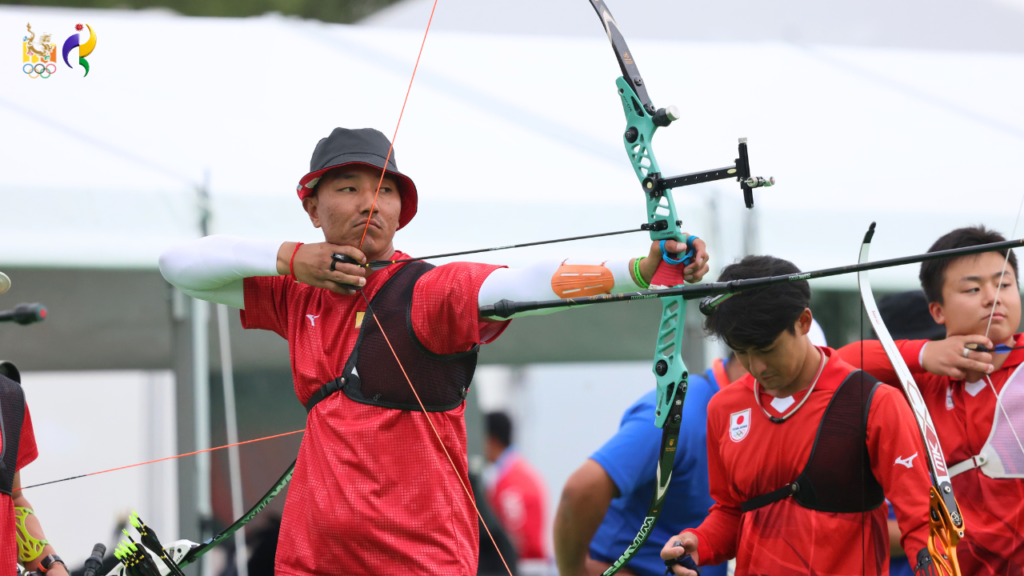
While Kinley was working his way through those matches, Lam Dorji was quietly building his own run on the other side of the draw. Lam had finished 31st in qualification with 659 points and opened his elimination campaign with a 6–0 victory over Kyrgyzstan’s Ulukbek Kursanaliev. The level of opposition increased in the next round when he faced Iran’s Mohammadhossein Golshani Asl, who had qualified eighth with 682 points, but Lam stayed composed and won 6–4. His third match was against Hong Kong, China’s Kwok Yin Chai, another leading qualifier who had finished 11th with 678 points, and Lam again came through 6–4 to earn his place in the quarterfinals.
The qualification round had brought together 58 archers from across Asia, including athletes from Korea, India, China, Chinese Taipei, Japan, Indonesia, Iran and several other established archery nations. India’s Dhiraj Bommadevara led the qualification with 698 points, followed by Korea’s Kim Je Deok and Chinese Taipei’s Tang Chih-Chun, while Korea’s Lee Woo Seok, Indonesia’s Ahmad Khoirul Baasith, Korea’s Kim Woojin, Japan’s Nakanishi Junya and Iran’s Mohammadhossein Golshani Asl were among the other leading qualifiers. The quality of the field was evident from the qualification standings, and it was against this depth of competition that Lam and Kinley began their individual campaigns.
When you look at the results afterwards, those scores can pass by quickly, particularly in a competition where matches are coming one after another and there is always another athlete preparing for the next session. Being at the venue, however, gives those numbers a different weight. You see the athletes trying to settle themselves before each shot, the coaches checking the scores, the movement around the range and the concentration that remains even when there are people talking and working around the competition area. More importantly, you understand that the names on the opposite side of the target are not simply names on a draw sheet. They are athletes who have spent years competing internationally and come from countries with established archery systems and a depth of experience at major competitions.
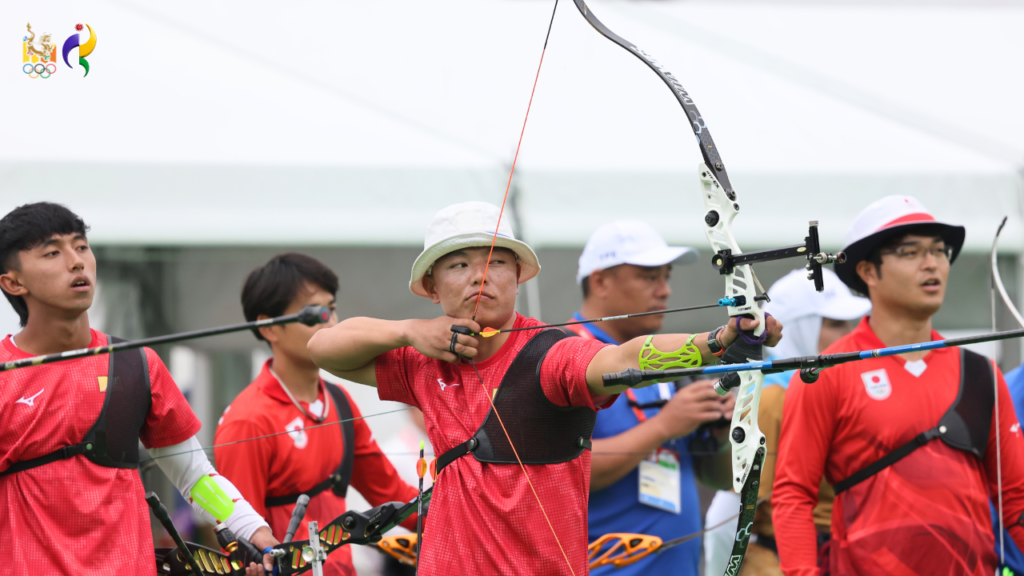
That is why I found myself looking at the qualification rankings again after both Lam and Kinley had reached the quarterfinals. Kinley had defeated the fifth-ranked qualifier and then the 13th-ranked qualifier, with the latter match requiring a shoot-off. Lam had defeated the eighth-ranked qualifier and then the 11th-ranked qualifier. Their own qualification positions had placed them 31st and 37th, but those positions no longer carried the same meaning once the elimination rounds began. Each match had become its own contest, and each opponent had to be dealt with on the shooting line rather than on paper.
There was something special about watching the two Bhutan archers progress through the same competition on the same day, because after one match the attention would naturally shift to the other target and everyone around the team would start following the next score. Coaches, teammates and support staff would gather around, conversations would turn to the next opponent, and gradually the question changed from whether Lam and Kinley could make it through another round to who they would meet in the quarterfinals.
Then the quarterfinal draw was confirmed, with eight archers remaining from the original field of 58 and two of those eight from Bhutan. I remember looking at the draw sheet and seeing Lam Dorji and Kinley Tshering alongside the names of athletes from Korea, India and other major archery nations. It was only a small entry on the official competition sheet, but standing there as part of Team Bhutan, it carried a different weight. There is a lot that goes into getting an athlete to an Asian Games that never appears in a result. There are coaches, families, teammates, preparation, travel, training sessions, difficult days and all the work that happens long before an athlete reaches the shooting line. When the result finally comes, everyone connected to that athlete feels a part of it.
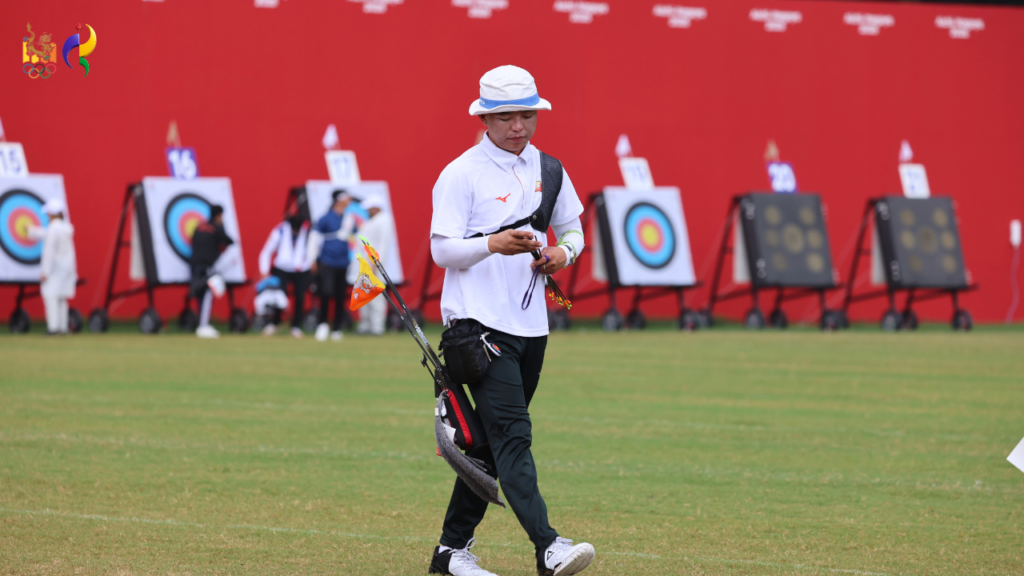
The reaction around the Bhutan group after Kinley’s shoot-off was a reminder of that. The emotion was not manufactured and it did not need to be explained. Everyone had watched the match, everyone had felt the pressure of those final moments and everyone knew what was at stake. When the result went our way, the relief was visible.
That is also why I think it is important to acknowledge the quality of the opponents without allowing their rankings to become something that intimidates us. Korea, India, China, Japan, Chinese Taipei, Indonesia and Iran have built some of the strongest archery programs in Asia, and their athletes arrive at competitions like the Asian Games with enormous experience behind them. There is no reason to ignore that level, but there is also no reason for Bhutan to walk onto the shooting line already believing that the contest belongs to someone else.
Lam and Kinley have shown that distinction through their performances at Okazaki. They have respected the level of the competition, but they have competed against it. They have not needed to make any grand statement about where Bhutan stands in Asian archery; their results have provided that part of the story themselves.
For me, that is what makes this achievement worth writing about beyond the simple fact that two athletes have reached a quarterfinal. It gives us a chance to look at Bhutanese sport from a slightly different angle. We are accustomed to measuring ourselves by participation, by qualification and by the experience of being present at major competitions. At Okazaki, the conversation became different because two of our athletes were not simply participating in the elimination rounds. They were winning them, including against archers who had entered the competition much higher in the qualification standings.
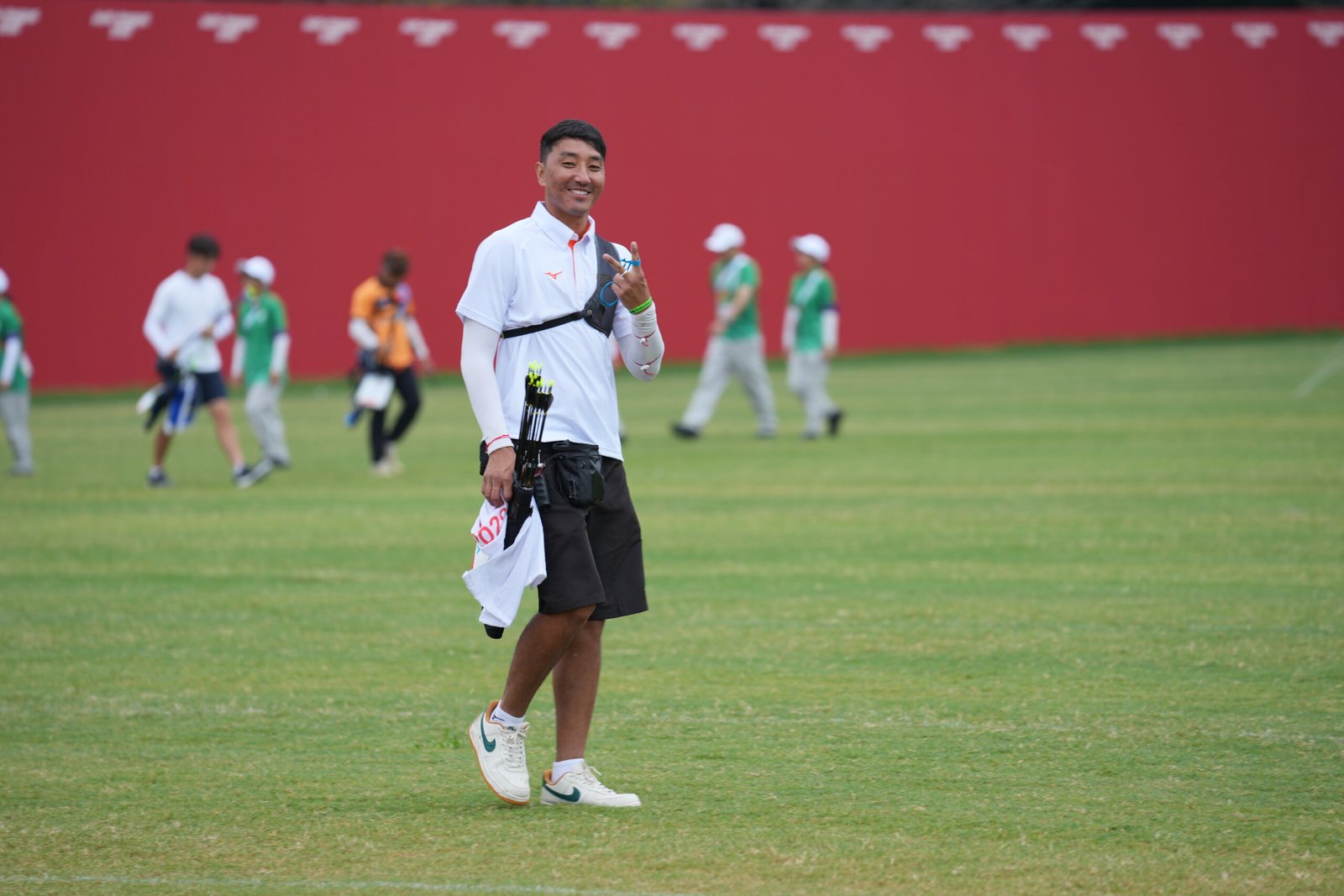
The quarterfinals will bring another level of challenge. Kinley will face Korea’s Lee Woo Seok on 3 October at 13:15 Japan time, while Lam will meet India’s Neeraj Chauhan at 13:45. Lee finished fourth in qualification with 687 points, while Chauhan finished 20th with 676. Both matches will demand the same composure, concentration and patience that brought our athletes this far, and there is no point trying to predict what will happen before either archer steps onto the shooting line.
What we know is what has already happened. We know that 58 archers began the Recurve Men’s Individual competition, that eight remain and that Lam Dorji and Kinley Tshering are two of them. We know that along the way they have faced athletes from some of Asia’s strongest archery nations, and we know that they have earned every one of their victories.
For those of us who stood at Okazaki and watched it unfold, the significance of the day was never simply that two names had reached a quarterfinal. It was seeing Lam Dorji and Kinley Tshering compete without being overwhelmed by the names on the other side of the target, watching them handle the pressure, stay with their opponents and earn their way through one difficult match after another. In a field of 58 archers, only eight remained, and two of those places belonged to Bhutan. The quarterfinals will bring new opponents, new pressure and another test, but that is for another day. For now, the picture from Okazaki is already clear: two archers wearing the Bhutan flag stood among Asia’s final eight, and they did not get there because they were given a place. They earned it, arrow by arrow, match by match, in front of everyone who was there to watch.
Meet Team Bhutan
Everything you need to know about Team Bhutan at the Asian Games 2026.