
Olympic Day 2026 in Eastern Bhutan
Eastern Bhutan Schools Host Olympic Day 2026 as Sports in Schools Program Expands
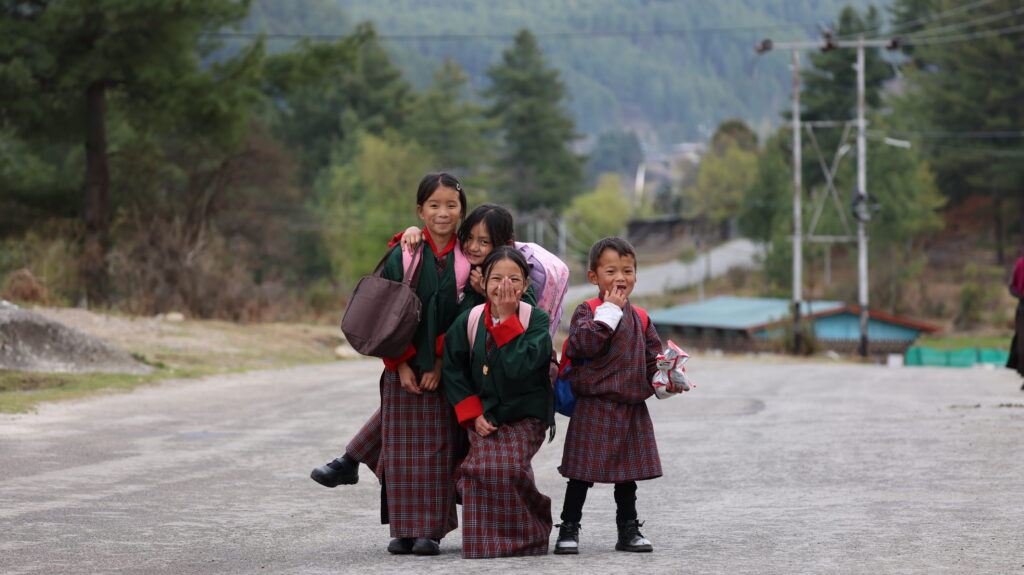
In the eastern valleys of Bhutan, school grounds are undergoing a subtle but meaningful transformation that is becoming increasingly visible with each passing season. What was once confined largely to scheduled physical education periods or occasional inter-school fixtures is now beginning to take on a more continuous presence within school life, shaped by a growing recognition that sport is not simply an activity but a foundation for participation, wellbeing, and community connection.
This shift has been gradually supported by the expansion of the Sports in Schools Program led by the Bhutan Olympic Committee, which has been working with schools across the country to integrate structured sport more deliberately into the education system. Its rollout in the eastern districts, including earlier phases initiated in Bumthang and subsequent expansions into surrounding regions, has contributed to a steady strengthening of sporting culture at the school level, where participation is increasingly being viewed not as an occasional opportunity but as part of everyday experience.
It is within this broader context that Olympic Day 2026 takes shape in eastern Bhutan, not as a standalone celebration, but as an extension of a process that is already underway.


A theme that travels quietly through communities
The global Olympic Day theme for this year, “Let’s Move +1,” carries a simplicity that conceals its intention. Rather than positioning movement as an individual act, it reframes it as something shared, inviting each participant not only to engage in physical activity but to bring another person along with them. In practice, this idea has proven particularly resonant in school environments, where influence is immediate, relationships are close, and participation often spreads through personal connection rather than instruction.
Across the eastern districts, this interpretation has begun to take shape in small but visible ways, as students encourage classmates to join activities they might otherwise have observed from the sidelines, and as teachers and community members increasingly find themselves participating alongside students rather than remaining outside the field of play.
A program unfolding across three schools
The Olympic Day celebrations in eastern Bhutan will be staged across three schools over the span of several days, each carrying its own character while remaining connected through a shared structure of sport, engagement, and community participation.
The program begins on 29 May 2026 at Panbang Primary School, where Kids Athletics and a school carnival will introduce younger students to movement through play-based activities designed to emphasise enjoyment, curiosity, and early engagement with sport. The atmosphere at this stage is expected to be informal and exploratory, allowing children to experience physical activity in a setting that prioritises confidence-building over competition.
This is followed on 30 May 2026 at Nganglam Lower Secondary School, where Olympic Day will coincide with Volleyball Finals. Here the tone shifts toward structured competition, with matches reflecting both school pride and the growing importance of team sport within the school environment. The energy of the event is shaped not only by the players on the court but by the presence of classmates and communities who engage closely with each moment of play.
The final activation will take place on 2 June 2026 at Minjey Middle Secondary School, again aligned with Volleyball Finals, bringing the program to a close in a setting that combines competitive intensity with community participation and celebration.

Movement as an entry point
Each Olympic Day activation begins with a five-kilometre Fun Run involving students, teachers, and members of the local community. Rather than functioning as a race, the run serves as an entry point into the broader program, establishing a shared physical experience that places emphasis on participation over performance. It is common to see students running alongside teachers, groups adjusting their pace to remain together, and participants moving in clusters that reflect familiarity rather than competition.
In this way, the run becomes less about distance covered and more about the simple act of moving together, setting the tone for the activities that follow.
Sport stations and the shaping of participation
Following the run, students engage in a series of sports stations designed to encourage teamwork, inclusion, participation, confidence-building, and healthy lifestyle habits. These stations are structured in a way that allows students of different ages and abilities to engage meaningfully, with an emphasis on interaction rather than outcome.
While the activities vary in form, the underlying pattern remains consistent: students learn to adapt to one another, to participate within groups that change and rotate, and to experience sport as a shared environment rather than an individual pursuit. In this sense, the stations function not only as physical activity spaces but as informal environments for social learning.
The Olympic Hub: sport in a wider context
Alongside the sporting activities, an Olympic Hub will be established at each site as a dedicated space for awareness and education. Within this space, students will engage with key themes such as safeguarding in sport, anti-doping education, and the prevention of competition manipulation, alongside broader Olympic values education.
The intention of the hub is to situate sport within a wider ethical and educational framework, ensuring that participants are exposed not only to physical activity but also to the principles that govern sport at every level of participation.
Community participation and shared ownership
A notable dimension of this year’s Olympic Day celebrations is the active role played by schools and communities in shaping the event environment. Food stalls managed by participating schools contribute both to engagement and local initiative, while additional elements such as interactive games, photo zones, lucky draws, and participation-based rewards help to create an atmosphere that extends beyond formal sporting activity.
This blending of sport, culture, and community engagement reflects a growing recognition that sporting events in school settings function most effectively when they are experienced collectively rather than in isolation.
A program built on continuity rather than occasion
While Olympic Day is often viewed as a single-day celebration, its 2026 edition in eastern Bhutan is closely connected to the ongoing implementation of the Sports in Schools Program in the region. The structures, habits, and participation models introduced through the program have already begun to influence how schools approach physical activity, and Olympic Day serves as a moment in which these developments become visible in a more concentrated form.
Rather than marking a beginning, the event reflects continuity, drawing attention to changes that have been gradually taking shape within school environments over time.
What remains beyond the event
When the program concludes, attention will naturally turn to participation figures and event delivery across the region, with more than 2,500 students expected to engage across the various activations. Yet the more lasting impact is likely to be found in smaller, less measurable moments: a student who chooses to participate where they might previously have hesitated, a teacher who joins an activity as a participant rather than an observer, or a group of students who begin to see movement as something shared rather than individual.
It is within these quiet shifts that the essence of “Let’s Move +1” finds its meaning, not as a slogan attached to an event, but as a pattern of behaviour that continues beyond it, carried forward in school fields, classrooms, and communities across eastern Bhutan.