Bhutan Bodybuilding Association
The Sport That Found Its
Way Back in Bhutan
|
The Return of Strength in Bhutan’s Bodybuilding
For a long time, bodybuilding in Bhutan existed in a quiet in-between space. It was neither absent nor fully present, sustained by a small but committed group of athletes who trained without certainty of where the sport was heading next. Competitions happened, then paused. Momentum built, then faded. What remained consistent was not structure, but individual discipline.
That quiet phase is now shifting into something far more defined. Bhutan is preparing to host the 16th Mr. Bhutan 2027 and the 17th South Asian Bodybuilding Championship 2027 in Gelephu Mindfulness City, alongside the confirmed 18th World Bodybuilding and Physique Sports Championship in Thimphu in November 2027. Taken together, these events mark a return not just of competition, but of Bhutan’s re-entry into the international bodybuilding landscape after more than a decade of absence.
At the center of this shift is Dr. Sonam Maekay Penjor, though his story with the sport did not begin with leadership. It began much earlier, around 2010, when he first came across bodybuilding in Bhutan and was struck less by the spectacle and more by the people behind it. He remembers athletes who trained with limited resources but never stopped showing up, even when the cost of nutrition, preparation, and competition was high and support systems were minimal.
“People were very passionate,” he recalls. “Even when it was difficult, they continued. That stayed with me.”
By 2011, he had already begun supporting athletes in small ways, not as part of any formal structure, but simply because he was drawn into the environment. At that time, bodybuilding in Bhutan was not a system. It was effort held together by individual commitment. That relationship deepened in 2013 during the filming of Baeyul, when he underwent a physical transformation for a demanding role, building up to 80 kilograms before cutting down to 67. It was a personal experience that changed how he understood the sport.
“You realize it is not about appearance,” he says. “It is about discipline. Repetition. Control. Every single day.” When he was appointed President of the Bhutan Bodybuilding Association in 2023, the sport was already in decline. The pandemic had disrupted competitions, participation had dropped, and the structure that once supported athletes had weakened significantly.
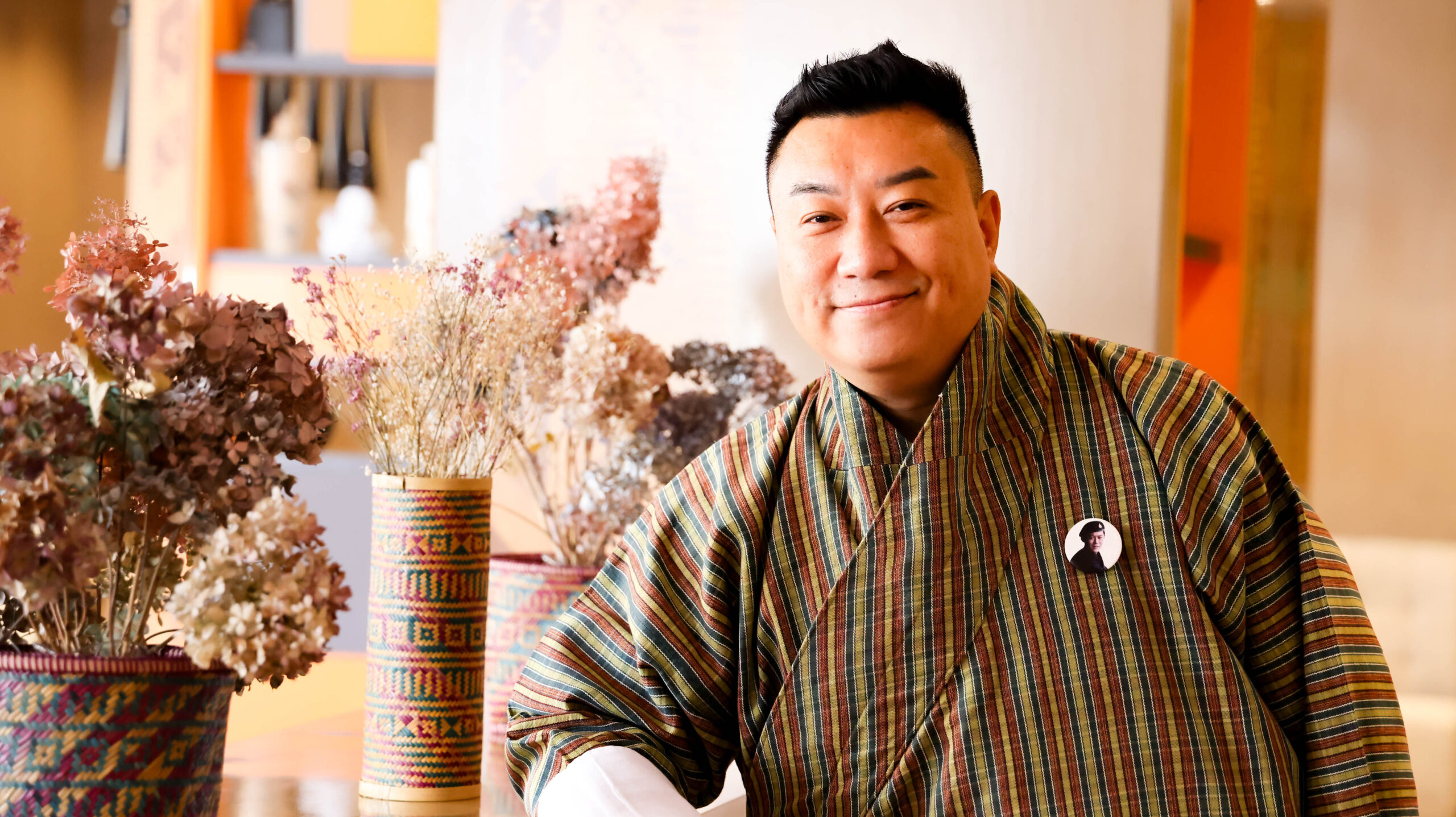
“There were still passionate individuals,” he says. “But the system around them had slowed down. So I told myself, if I take this responsibility, I will give it everything.”
The early phase of rebuilding did not begin with expansion, but with visibility. In 2024, the 13th Mr. Bhutan was revived after a four-year gap and moved to Clock Tower Square, bringing bodybuilding back into public view instead of closed venues. That decision alone changed how the sport was perceived, reintroducing it as something visible, open, and part of everyday public space.
From there, progress began to build step by step. In 2025, junior bodybuilding was introduced, creating a pathway for younger athletes. Participation grew from 21 athletes in 2025 to 42 in 2026, reflecting a slow but steady return of confidence. Female participation also began to increase during this period, while prize structures were strengthened, with awards reaching USD 5,000 for major competitions.
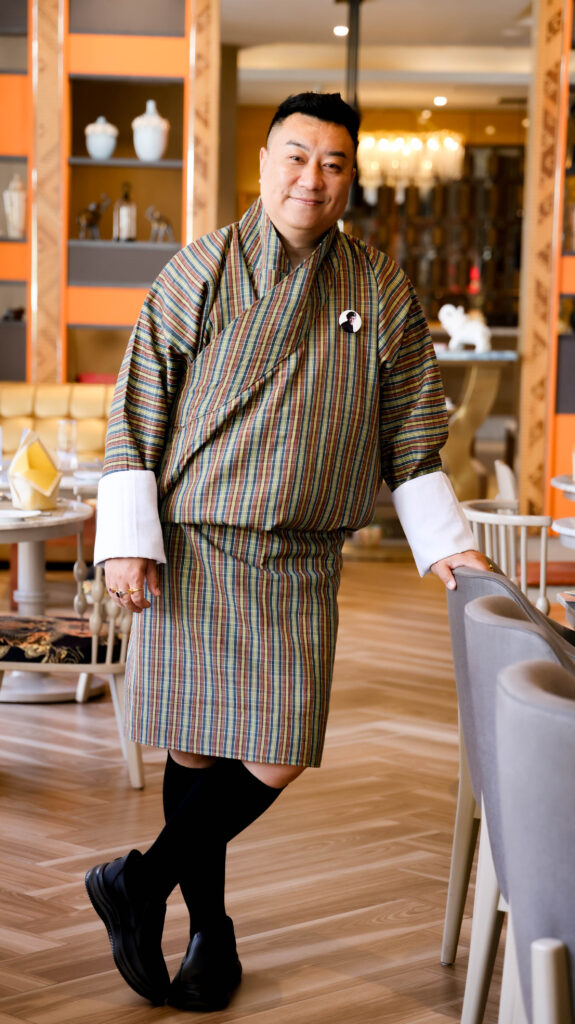
The 15th Mr. Bhutan 2026 reflects this transition in structure. Scheduled for July 5 in Thimphu, with prejudging in Paro on July 4, it is now part of a wider sporting period running from June 8 to June 14. What was once a single-day event is now part of a broader calendar, signaling a shift toward more sustained sporting development.
At the international level, Bhutan’s return is even more significant. The country previously hosted major events such as the South Asian Championship in 2010 and the Asian Championship in 2016, but remained absent from hosting international competitions for more than 15 years.
That gap is now being closed through a clear sequence of events. The 15th South Asian Bodybuilding Championship in 2025 marked the return, followed by the upcoming 17th South Asian Championship in 2027 in Gelephu. Beyond that, Bhutan will host the 18th World Bodybuilding and Physique Sports Championship in Thimphu from November 2 to 8, 2027, placing it back on the global sporting map.
“Athletes want stronger competition,” Dr. Penjor says. “They want to test themselves against better opponents.”
That demand is already visible in participation trends. Countries that once sent one or two athletes are now sending full teams. Afghanistan, for example, has grown from a single participant to nearly 20. Across the upcoming events, more than 150 athletes are expected to compete, bringing increased competitive depth as well as regional visibility.
Alongside this growth, Dr. Penjor’s role within the sport has expanded internationally. In 2025, he was elected Vice President of the South Asian Bodybuilding Federation during its congress in Thimphu. By early 2026, he became Executive Vice President, and later that year, Vice President of the Asian federation, representing 44 countries. These positions place Bhutan within decision-making structures at a regional and continental level. “These roles are responsibilities,” he says. “They allow Bhutan to contribute to how the sport develops.”
Despite this international expansion, his focus remains firmly within Bhutan, particularly in Gelephu Mindfulness City, which will host major upcoming events. The location aligns with the broader national vision of development centered on wellbeing and long-term sustainability.
“This is about contributing to a larger vision,” he notes. That vision is closely aligned with the leadership philosophy of His Majesty Jigme Khesar Namgyel Wangchuck, who has consistently emphasized that national strength is rooted in the wellbeing of the people. Within that framework, sport is not only competition, but part of shaping healthier and more disciplined lifestyles.
In Gelephu, this idea is being translated into practical planning. Athletes will receive structured support, including nutrition and preparation guidance, while local talent will be gradually integrated into training pathways. Open training environments and community engagement are also being considered as part of the sporting ecosystem.
There is also a longer-term vision of building a large-scale, state-of-the-art gym facility under a CSR model, designed to ensure affordability and accessibility, including free access where possible.
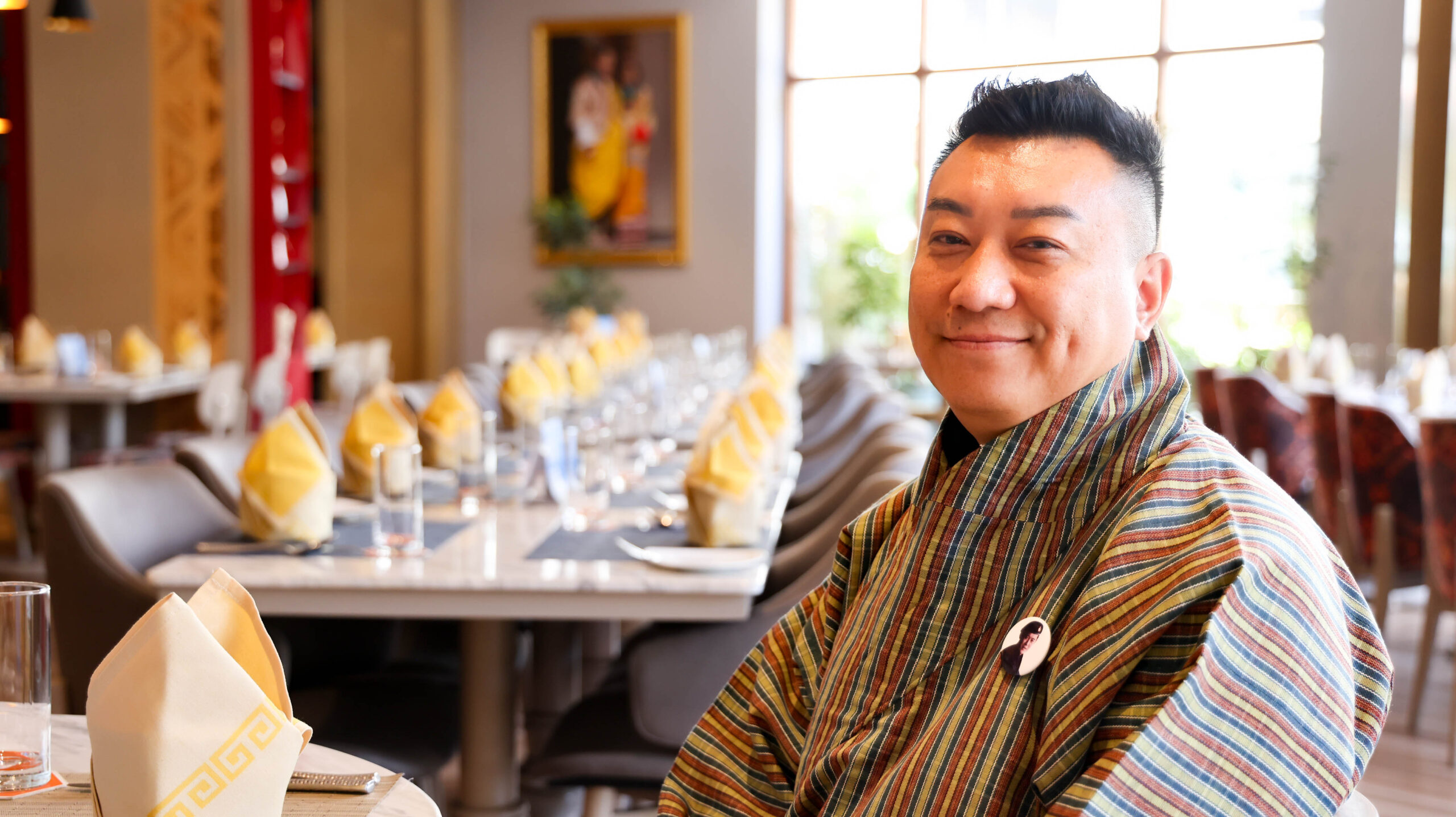
“If people can access it, they will use it,” he says. “The idea is to make fitness part of daily life.” Behind this vision is a personal foundation shaped by his upbringing. He often speaks of his mother’s journey from a teenage parent to a successful entrepreneur, and his father’s contribution to community service and spirituality, both of which shaped his understanding of responsibility beyond personal achievement.
“You begin to understand what it takes to build something that lasts,” he reflects. As Bhutan moves toward 2027, the scale of events will continue to grow, but what stands out is not speed, but structure. A sport that once depended on individual effort is gradually being shaped into a system.
For Dr. Penjor, the intention remains clear. “By 2029, I would like to hand over the responsibility,” he says. “But I want to leave behind something stable, something that continues beyond me.”
What is unfolding is no longer just a revival. It is the construction of a sporting system that connects local participation with international opportunity, shaped by patience rather than urgency, and built with the expectation that this time, it will last.