Sidelined, Not Defeated
How the Bench Can Make You Better Than Ever
There is a sound that athletes never forget — a small, terrible sound that makes everything rearrange itself. A pop. A crack. The hush of an x-ray room. The bench becomes more than a seat; it becomes a map of absence.
In that hush, fear arrives first. Then grief. Then the small, corrosive question: “Who will I be if I lose this?” You watch the game from the outside and, because you are human, you imagine the worst. And yet, if you sit with the truth long enough, you will find something else: opportunity disguised as stoppage.
This is the Injury Advantage. It is not a cliché. It is not consolation. It is a strategy.
Most of us treat speed like a virtue. Faster is better. Faster is safer. An injury forces a different moral: stop. Not as an exile but as an invitation. A forced pause is the only time you’ll get honest views of the parts of your game — and your life — you tightened up and ignored.
The injury doesn’t invent weakness. It points it out. Maybe your hips have never had true mobility. Maybe your hamstrings have been doing double duty for everything else. Maybe your sleep has been a commodity you auction away. Maybe your head chews on negativity after a mistake and never lets go.
So the first rule is simple: treat this as an audit. Sit down with pen and light. Write the truths you run from in practice. Choose one thing — mobility, breathing, diet, mental toughness — and promise to master it. Small, consistent work wins here. This is how you begin to take time back.
The second lesson: mental reps are not consolation — they are architecture
There is a muscle you can exercise even when your body is on the bench: your imagination. Athletes who return better than before learn how to rehearse with their eyes closed.
Find fifteen minutes. Sit somewhere quiet and breathe until the world thins. Picture a single play: every micro-decision, every weight of the ball, every angle. Hear the smack of cleats. Smell the grass. Feel the balance of shoulders and hips. Play the scene until there are no loose threads.
Why this works: your brain lays tracks while your body rests. Countless studies show the neural patterning of imagined movement overlaps with actual movement. But beyond science there is a deeper truth: rehearsing wholeness trains your confidence. When you finally run that movement again, it will be less foreign. Your body will remember what your mind has already lived.
Do this daily. Add two-minute “what-went-wrong” mental edits, where you run the play again and remove one small mistake. Repeat. These are silent repetitions. No applauds. No cameras. Just the slow accumulation of mastery.
Setbacks aren’t the end of your story—they are the quiet chapters where greatness is forged.
Comes a time when celebrity examples help because they show possibility. Serena Williams left courts and hospitals and returned again not because her talent disappeared but because her will was louder than suffering. Kevin Durant’s recovery from an Achilles rupture was not a miraculous rebound; it was months of patient work and adjustments. Tom Brady’s career didn’t survive because of genes alone — he rebuilt how he played.
But your story will not be measured by trophies. It will be measured by the choices you make in the evenings when no one checks your stats. Will you show up for the rehab exercises you hate? Will you take the cold bath you want to skip? Will you eat the meal that helps healing rather than the meal that comforts?
Those choices are small. They add up. They are the quiet currency of comebacks.
Practical blueprints — what to do on the bench (not theory, but habit)
Comes a time when celebrity examples help because they show possibility. Serena Williams left courts and hospitals and returned again not because her talent disappeared but because her will was louder than suffering. Kevin Durant’s recovery from an Achilles rupture was not a miraculous rebound; it was months of patient work and adjustments. Tom Brady’s career didn’t survive because of genes alone — he rebuilt how he played.
But your story will not be measured by trophies. It will be measured by the choices you make in the evenings when no one checks your stats. Will you show up for the rehab exercises you hate? Will you take the cold bath you want to skip? Will you eat the meal that helps healing rather than the meal that comforts?
Those choices are small. They add up. They are the quiet currency of comebacks.
Practical blueprints — what to do on the bench (not theory, but habit)
Comes a time when celebrity examples help because they show possibility. Serena Williams left courts and hospitals and returned again not because her talent disappeared but because her will was louder than suffering. Kevin Durant’s recovery from an Achilles rupture was not a miraculous rebound; it was months of patient work and adjustments. Tom Brady’s career didn’t survive because of genes alone — he rebuilt how he played.
But your story will not be measured by trophies. It will be measured by the choices you make in the evenings when no one checks your stats. Will you show up for the rehab exercises you hate? Will you take the cold bath you want to skip? Will you eat the meal that helps healing rather than the meal that comforts?
Those choices are small. They add up. They are the quiet currency of comebacks.
Daily five-line audit
— Morning: I slept — / Nutrition check — / Mobility 10 min — / Mental reps 15 min — / One small victory logged.
Keep it brutally simple. Consistency beats spectacle.
The Bench Pillars
- Mobility & Prehab: low-load, high-frequency mobility work (ankle, hip, thoracic) — 10–20 mins, twice daily. Isometrics for the injured area to maintain neuromuscular engagement.
- Strength Where Allowed: if the injured joint forbids load, strengthen supporting muscles (contralateral limbs, core, scapular stabilizers).
- Cardio Adaptation: bike, pool, or upper-body erg to keep the engine humming without stressing the healing tissue.
- Nutrition & Sleep: proper protein spread, anti-inflammatory choices (not fads), and sleep routine — same wake time, wind-down rituals.
- Mental Skills: visualization scripts, breath control, and a 3-minute pre-game calm routine you repeat every day.
A weekly structure
- Monday: Mobility + mental rehearsal of set plays.
- Tuesday: Strength (non-injured areas) + technique notes.
- Wednesday: Review film (watch your best game, three clips, note one adjustment).
- Thursday: Pool/erg + gratitude log.
- Friday: Skill micro-session (video + mental reps).
- Weekend: Rest + social connection — call a teammate, go watch a practice, stay in the tribe.
Micro-goals, not deadlines
Replace “be back by X” with “I will hit 8/10 days of mobility this week.” The brain loves achievable wins. They create momentum.
Rituals that anchor
Create a bench ritual: a piece of music you play before your visualization; a shirt you put on when you do rehab; a small object (a worn tape, a pebble) that reminds you why you play. These are anchors. They turn chaos into context.
Stories that land like hammers
A high-school runner I once coached (call her Maria) tore a tendon in sophomore season. She watched teammates sprint past the finish line while she iced in the car. She could’ve given up. Instead, she learned to love thighs and hips she’d ignored. She did mobility every morning, pictured races in the evening, and learned to swim efficiently to hold fitness. Two seasons later she ran her personal best and did not talk about pain but about patience. People asked her how she did it. She answered: “One day at a time.”
There is also the quarterback who rewired his throw after a shoulder sprain. He used the bench to refine decision-making: reading coverages in slow motion, practice snaps in his mind, living each play until the play lived in him. He returned smarter. He was less flashy but more precise. Stats don’t always show this, but winning does.
The social muscle — you are not an island
Ask for help. Tell your coach what you do each week. Invite a teammate to rehab with you (companionship shortens pain). Share one thing with family that you need. Acceptance is strength; hiding is a tax on recovery.
When setbacks happen — because they will
Rehab isn’t linear. You will have mornings of despair. Name them. Put a time limit: feel the despair for thirty minutes; then continue the plan. Small rituals — a short walk, a call to a friend, a song — can reset you. Remember: resilience is not the absence of pain. It is the decision to keep building anyway.
The world loves a comeback story—but what they don’t see is the fire that forges it.
Think about Serena Williams. She wasn’t knocked down by a twisted ankle—she fought through a pulmonary embolism, something that threatened her life, not just her career. Her return wasn’t fueled by talent alone. It was powered by an indomitable will.
Or Tom Brady, who tore his ACL and was told the ride was over. He used that time to reinvent his mechanics, rebuild his strength, and extend his career into legendary territory.
These aren’t stories of broken athletes. They are stories of athletes who refused to be defined by injury. And now—it’s your turn.
Every painful rehab session. Every lonely gym workout. Every night you watch your team play without you. These are not setbacks. These are tests of who you really are.
And when you rise from that bench, you won’t just be back. You’ll be sharper. Stronger. Harder to break.
Because the game is not only about physical talent. It’s about the unshakable belief forged in moments when no one is watching.
The bench is not a sentence. It is a classroom. Every hero in sport and life learned the same language: when the world stops you, you learn the work that wins. You will meet days when shame sits beside you, when teammates talk and you nod, when old identity feels like a garment you’ve outgrown. That’s when you choose.
You can waste this forced silence by fretting or you can use it to make a stronger you. The difference is practice, small and steady. The difference is a mind that refuses to accept “once injured, forever diminished.” The difference is doing the lonely, small work every day until one morning you look up and find the field is waiting and you are ready.
So begin now. Choose one small thing and do it today. Fifteen minutes of visualization. Ten minutes of mobility. One call to a coach. One healthy meal. Make a promise to the person you will be. Then keep that promise.
When you return — and you will return — you will bring something your competitors didn’t earn in the sun: a character forged in the quiet, a mind sharpened by rehearsal, a body rebuilt with intent. That is your secret training ground. That is the Injury Advantage.
Write the first line of your comeback. Make it simple. Make it true. Then stand and do the next small thing. The rest will follow.
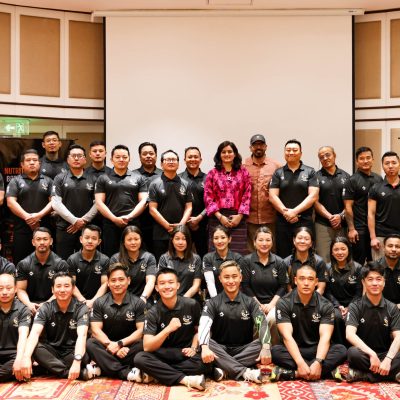
Bhutan Charts a Fresh Path in Sports Leadership
Curious to know who’s shaping the future of sports in Bhutan? Meet the full executive board here
Latest Updates and Insights
Discover our newest blogs, news, and announcements—curated just for you. Stay informed and inspired!
THE WORLDWIDE OLYMPIC PARTNERS