Rethinking the Game Are We Competing, or Simply Repeating Ourselves?
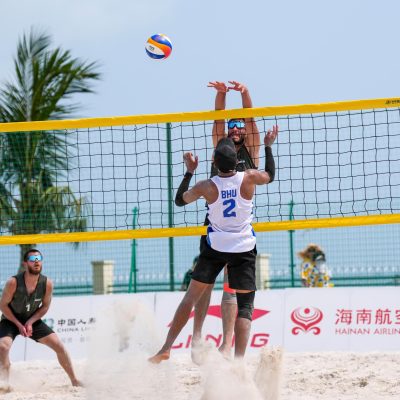
Spend enough time around sport in Bhutan and a certain familiarity begins to settle in, not in the passion of the players or the commitment of the organizers, but in the structure of it all, in the way events unfold, conclude, and quietly disappear before the next one takes their place. A final in one place begins to echo another held weeks later elsewhere, tournaments arrive under new names yet unfold in much the same way, and even the moments that ought to stay with us seem to fade sooner than they should.
None of this is born out of neglect. On the contrary, Bhutanese sport is sustained by effort, often remarkable effort, from individuals who operate within constraints that are very real. Limited infrastructure, modest budgets, and the constant pressure to deliver something functional and respectable leave little room for indulgence in experimentation. Under such circumstances, it is only natural that organizers, coaches, and decision-makers lean toward what is familiar, what has worked before, what can be relied upon to produce an outcome without unnecessary risk. Stability, in this sense, becomes both a necessity and a habit.
Over time, however, habits shape systems, and systems, if left unexamined, begin to define the limits of what is possible.
Bhutan has many sports events, but they are mostly the same in structure and experience.
What has gradually emerged is a sporting environment that is active but not always evolving, one in which tournaments are successfully conducted yet rarely distinguished from one another in any meaningful way. The differences are often cosmetic rather than conceptual, and while participation may remain steady, the experience itself struggles to deepen. For spectators, the sense of anticipation is tempered by familiarity; for sponsors, the value proposition begins to blur; and for athletes, particularly the younger generation, sport risks becoming a sequence of isolated events rather than a journey that carries meaning beyond the immediate result.
It would be easy to interpret this as a question of resources, and certainly resources matter, but to stop there would be to miss a more fundamental issue. The challenge is not simply about what we have, but about how we think about what we have. In many ways, Bhutan continues to approach sport within inherited frameworks, replicating formats and structures that were developed in contexts vastly different from its own, and measuring success against standards that do not necessarily reflect its unique identity.
You are doing what works, but that is also what is limiting progress.
This tendency to imitate is neither unusual nor entirely misguided, but it does come at a cost. In trying to align with external models, there is a quiet risk of overlooking the very qualities that could make sport in Bhutan distinctive, even compelling, on its own terms. A country that has long emphasized community, balance, and wellbeing as central to its philosophy does not naturally lend itself to a purely transactional view of sport, yet that is often the direction in which events are unconsciously shaped.
The question, then, is not whether Bhutan can organize better tournaments, but whether it is willing to reconsider what a tournament is meant to be.
There is a difference between refining what already exists and reimagining it altogether, and it is in that difference that meaningful change tends to reside. When sport is treated solely as competition, its value is inevitably confined to results, rankings, and short-term engagement. When it is approached as an experience, however, its potential expands, allowing it to connect with people in ways that extend beyond the field of play. It begins to create memory, identity, and a sense of belonging, elements that are not easily measured but are deeply felt.
Bhutan, perhaps more than many others, is well positioned to make this shift, not because it has greater resources, but because it operates within a cultural context that already prioritizes connection over scale and meaning over spectacle. The challenge is not to import something new, but to recognize what is already present and to allow it to inform how sport is designed and delivered.
The real problem is not resources, it’s imagination
This does not require a dramatic overhaul of the system, nor does it demand immediate, large-scale transformation. In fact, it is more likely to emerge through a series of smaller, deliberate choices made by those who shape the sporting landscape. A willingness to question standard formats, to design events that engage communities more deeply, to create moments that resonate beyond the final whistle, all of these are incremental steps, but collectively they have the capacity to alter the direction of sport in a meaningful way.
For those in positions of responsibility, this is both an opportunity and a challenge. The demands of administration often leave little room for reflection, and yet it is precisely reflection that is needed at this stage. To continue as we are is not inherently wrong, but it does raise the possibility that we may be settling into a cycle of competence without progression, where events are managed effectively but rarely imagined differently.
You are doing what works but that is also what is limiting progress.
Bhutan does not need to compete with larger sporting systems on their terms, nor would such a pursuit necessarily yield the kind of outcomes that align with its broader values. Its strength lies in its ability to offer something more grounded, more human, and ultimately more meaningful, if it chooses to lean into that identity rather than step away from it.
What lies ahead, therefore, is not a question of capacity, but of intent. Whether sport in Bhutan continues along its current path or begins to explore new directions will depend less on external factors and more on the willingness of its leaders to think beyond the immediate and engage with the possibility of something different.
Because in the end, the distinction is subtle but significant. It is the difference between organizing events that take place and creating experiences that endure.
Bhutan Charts a Fresh Path in Sports Leadership
Curious to know who’s shaping the future of sports in Bhutan? Meet the full executive board here